A First Show to Open a New Chapter
Matthieu Blazy presented his first collection at the helm of Chanel at the Grand Palais in Paris. The Spring-Summer 2026 offering turned his debut into a conversation between the maison’s history and a contemporary perspective: the house’s recognizable codes remained present, but their proportions, textures, and combinations changed.
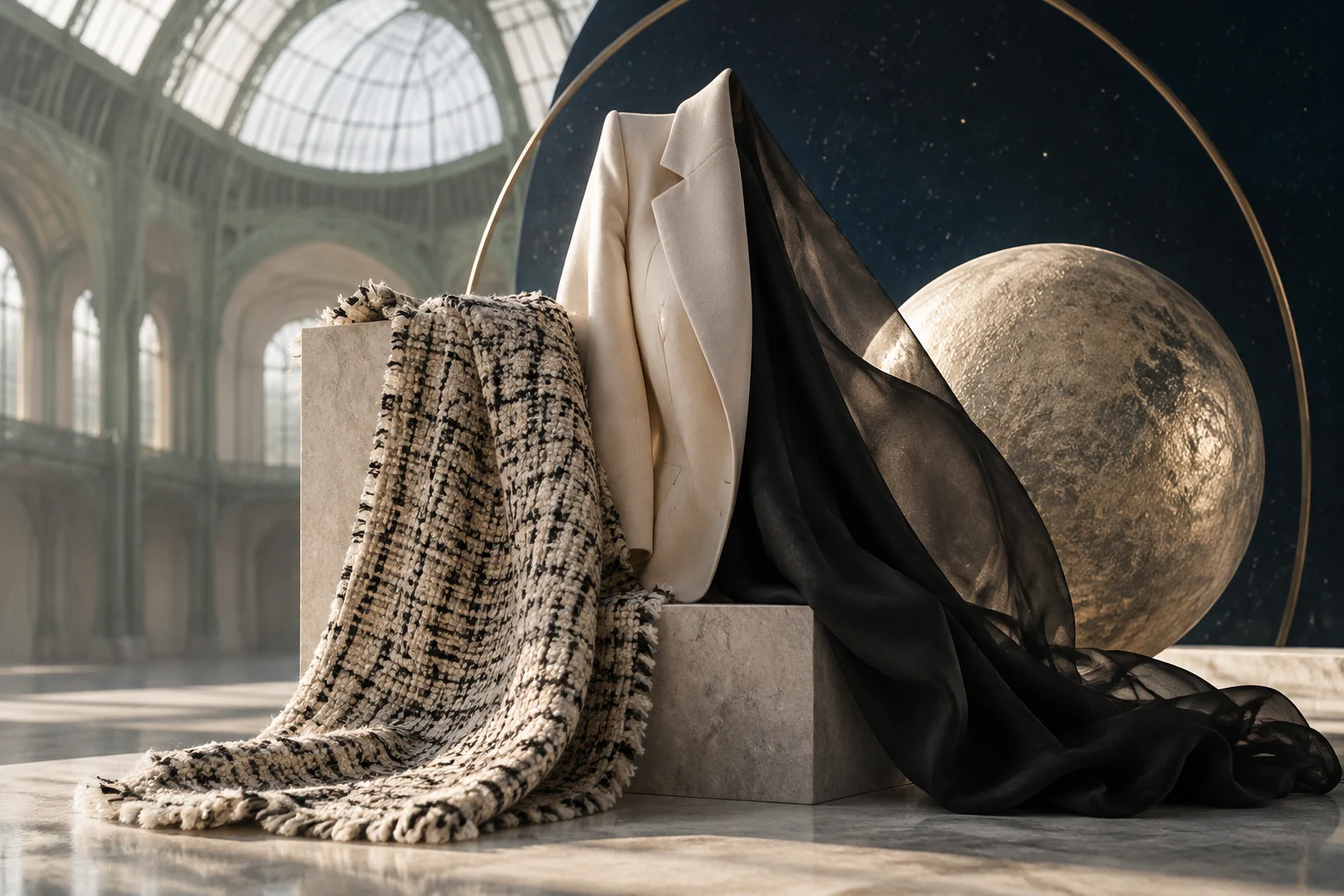
The set supported that intention. The space was transformed with large, colorful planets, creating an image of a universe of its own that contrasted with the sobriety of some of the garments and foreshadowed a collection with diverse expressions. The show closed with model Awar Odhiang, whose final walk brought an energetic tone to the presentation.
Familiar Codes, Freer Silhouettes
Tweed, camellias, pearls, and two-tone shoes appeared without functioning as literal reproductions of the archive. The fashion press particularly highlighted the treatment of tweed: lighter and frayed, with variations in texture and materials that included raffia and beaded embroidery. Suits with generous proportions and jackets with defined shoulders were also presented.
The collection played with garments associated with men’s tailoring and traditionally feminine elements. Shirts and Oxford shoes were paired with skirts; some low waistlines revealed a strip of ribbed fabric, while the dresses revisited a straight silhouette associated with the 1920s. According to coverage of the show, the overall effect was less rigid than a classic reading of the Chanel suit.
References to Gabrielle Chanel’s Early Years
Three shirts developed with Charvet, a Parisian shirtmaker, stood out among the details with historical undertones. The proposal evoked Arthur “Boy” Capel, Gabrielle Chanel’s partner, who is said to have worn shirts from the house. The pieces incorporated the Chanel name in a cursive typeface inspired by the maison’s labels from the 1920s.
Blazy also approached the 2.55 bag through use and the passage of time: a version with metallic threads could wrinkle in the hand. In footwear, slingbacks and other two-tone styles retained their association with Chanel while changing their silhouette. These decisions show how the collection worked with familiar objects without limiting itself to presenting them as untouched emblems.
A Creative Reading, Not a Measure of Results
Reports described the debut as a bid for a freer chapter for the house and noted the contrast between Chanel’s heritage and the changes introduced by Blazy. That assessment reflects the editorial reading of the collection and its staging; on its own, it does not establish effects on sales, demand, or financial results.
The show did, however, leave a visible creative direction: preserving elements that make the maison recognizable while altering their visual weight through lighter fabrics, blends of codes, and less conventional silhouettes. Its commercial reach and the sustained reception of the proposal cannot be determined solely from the runway presentation.