
Glossary · 14.10.2026
Essential Glossary: Unifying Team Management Language in SMEs
Clear definitions of roles, workflows, and metrics to improve operational coordination and internal communication in small and medium-sized enterprises.
Read storyUseful journalism to understand, manage and grow a business.
SearchA practical guide for exporting SMEs to research tariffs, labeling, and certifications by country and product, and prepare documentation before shipping goods.

Import requirements in the United States, Canada, and Mexico depend on the destination country, tariff classification, and product type. A label or certificate that works for one product will not necessarily be sufficient for another, even within the same market. For this reason, research should be conducted product by product and using official sources: general guides help organize the work, but they do not replace verification of the rules in force for each transaction.
Before estimating taxes or checking permits, describe the goods precisely: composition, use, presentation, country of origin and, where applicable, manufacturing process. With this information, determine the applicable tariff item or classification. The code is a starting point for checking duties, restrictions, quotas, and possible trade preferences.
Do not assume that a commercial description is sufficient to classify a product. If in doubt, consult the relevant customs authority or seek specialized guidance. An incorrect classification can lead subsequent searches to requirements that do not apply.
For products subject to food and health regulation, the FDA is a key authority on safety and labeling. Specific requirements vary by category: food, cosmetics, and consumer goods may be subject to different rules, as well as possible obligations imposed by other U.S. authorities.
Check what information must appear on the label, in what format, and under what conditions. For food, for example, it is not enough to adapt a label used in another country: you must verify the U.S. requirements that apply to the specific product. The information available here does not detail procedures or specific rules for each sector, so research should continue with the competent official sources.
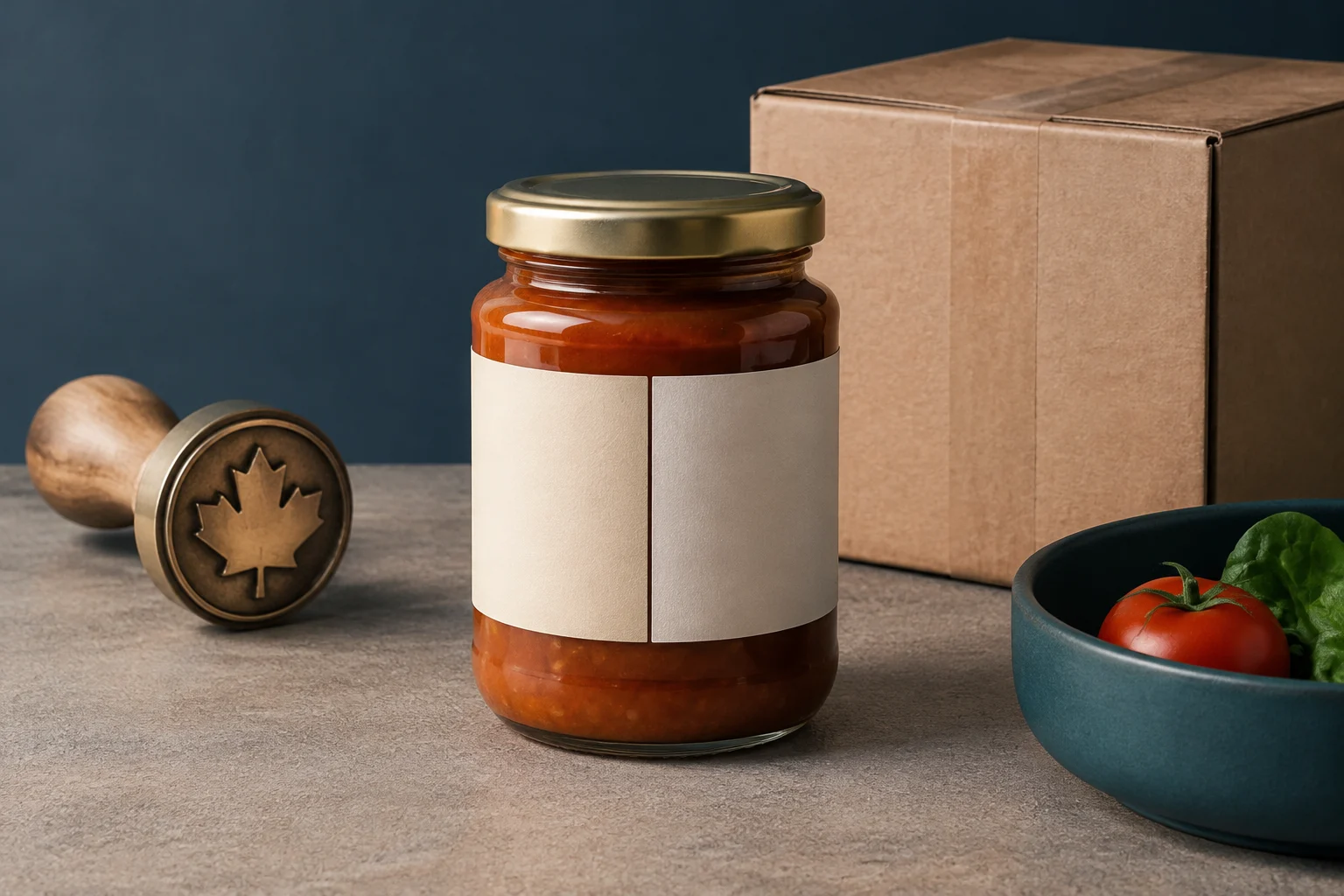
For food, the Canadian Food Inspection Agency (CFIA) provides information on requirements applicable to specific products and categories. The Consulate of Mexico in Vancouver guide also recommends checking the specific regulations and considering the HACCP plan for food. That guide focuses on British Columbia, the Northwest Territories, and Yukon; its guidance on promotion and support should not be interpreted as an exhaustive guide to all of Canada.
Bilingual labeling, in English and French, is an aspect companies should check for the Canadian market. Do not assume that all products have identical language or presentation requirements: confirm the requirements for the relevant category and product using the labeling tool and the pertinent official sources.
To check tariffs, use Canada’s Customs Tariff and search by the goods’ code. The consular guide also advises checking whether the product is subject to import controls and consulting the Canadian agency responsible for regulating it. For organic food, it mentions recognition of a Canadian organic seal; verify the current and applicable conditions before marketing the product.
In Mexico, check the Official Mexican Standards (NOMs) that apply to the goods. Requirements are not the same across all sectors: food, textiles, footwear, toys, cosmetics, cleaning products, and electrical appliances may be subject to different provisions.
For certain products, the information available indicates that an accredited Commercial Information Verification Unit may inspect labels and issue a conformity document or a report, depending on the case. Intertek, for example, states that it is accredited to verify labels for specific products. This does not mean that every product must go through this company, nor that its service replaces consulting the applicable NOM and the requirements of Mexican authorities.
For tariffs, SIAVI can be used to look up tariff items and foreign trade measures. Check that the information is current, and confirm the classification and applicable treatment with official sources before finalizing costs or shipping the product.
Organize the research in a separate record for each product and market. This method helps distinguish general foreign trade requirements from sector-specific requirements and identify outstanding documents before shipment.
For food, add a specific review of sanitary requirements and certifications. For textiles and other consumer goods, check the rules on composition, product designation, and commercial information that apply in the destination market; do not automatically transfer requirements from one region to another.
Consular guides can help organize tasks such as researching the market, calculating costs, checking origin records, and preparing certifications. The Vancouver guide, for example, includes procedures to complete in Mexico and planning steps for exporting to its consular jurisdiction. It is a guidance tool, not an official determination that a product meets Canadian requirements.
Similarly, tariff search tools can help locate information, but the results depend on the code and origin being correctly determined. Tariffs and controls may vary according to the product, origin, and terms of a trade agreement. If preferential treatment is being sought, you must also check the rules of origin and required documentation: the existence of an agreement does not in itself guarantee a reduced tariff.
Clear definitions of roles, workflows, and metrics to improve operational coordination and internal communication in small and medium-sized enterprises.
Read story
Standardizing technical and operational language to optimize communication between management, technical and driving teams in the transport sector.
Read story
A self-assessment guide to review inventory, data, validation, human oversight, and model monitoring. The cited frameworks vary by jurisdiction and do not constitute universal requirements.
Read story