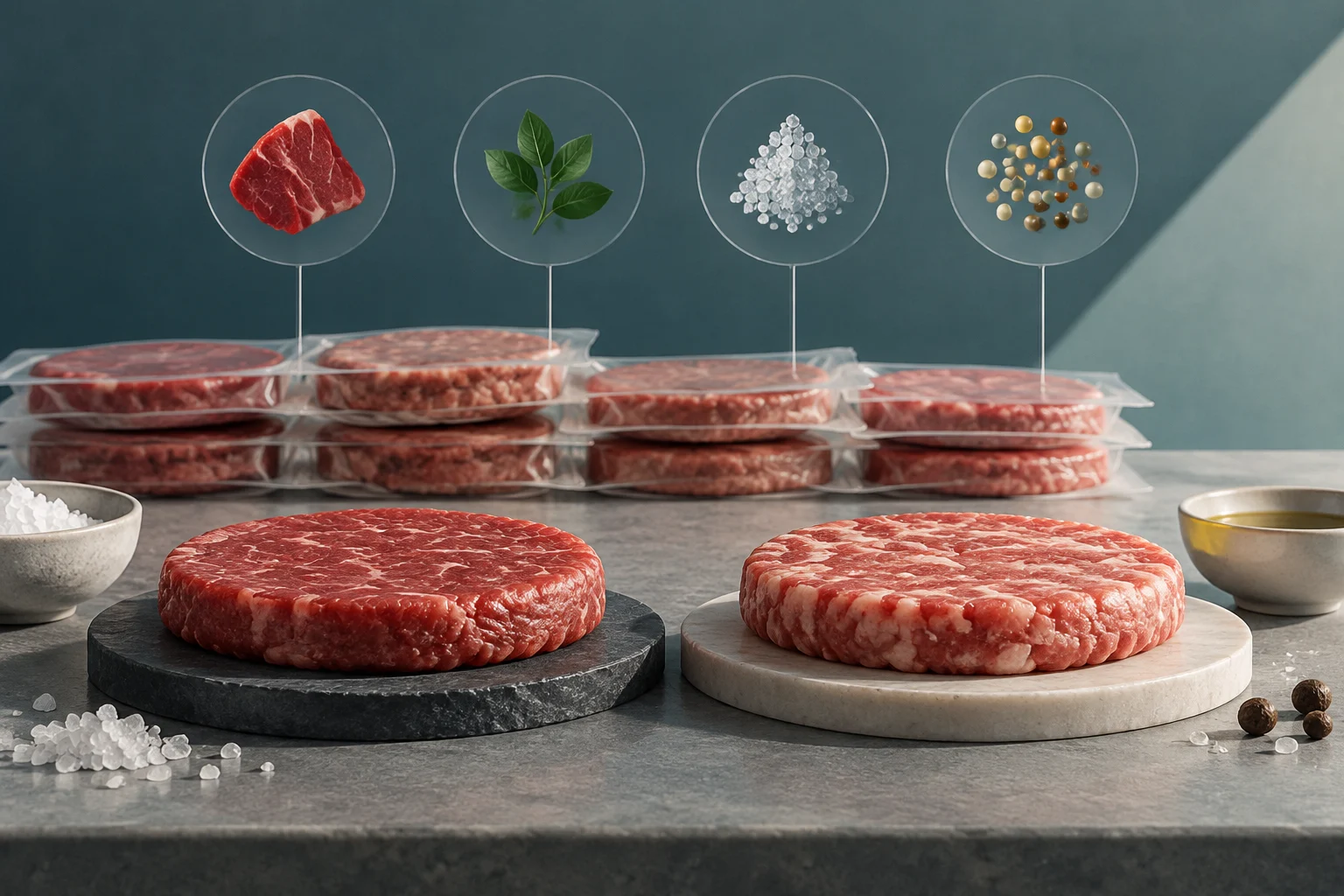
The quality of the meat, added ingredients and results in the pan vary among supermarket burgers. This is what an analysis by the Organisation of Consumers and Users (OCU) found in ten packaged beef products. The organisation examined their composition, labelling, hygiene and nutritional profile, and also had them taste-tested by experts.
The study included eight products labelled burger meat and two labelled as burgers. OCU detected no fraud or hygiene problems in the samples. It did find differences in the raw materials, the use of additives and sulphites, and flavour characteristics.
Burgers and burger meat: differences on the label
The name helps explain what each product contains. According to information from OCU, fresh burgers are made from minced meat and may contain salt, while packaged preparations may include other ingredients. To be called burger meat, a product must contain at least 4% plant-based ingredients, such as cereals, vegetables or pulses.
Of the ten products analysed, Coren was the only one without additives; two products contained as many as five. OCU found preservatives, antioxidants and colourings. It also observed differences in sulphites: the amounts detected ranged from undetectable levels to 164 mg/kg. The organisation stated that the values found were within the permitted limits and that no sulphites were declared or detected in Coren and Círculo de Calidad (Carrefour).
Meat quality and taste-test results
To assess the raw materials, OCU did not rely solely on the stated percentage of meat: it also analysed protein, fat and the ratio of collagen to protein, an indicator related to the presence of connective tissues. It found no excess of these tissues in the samples and no evidence that low commercial-value meats had been used. Coren, Hamburdehesa, La Finca and Pujols stood out for the quality of their meat, according to the analysis.
The taste test revealed other differences. The study coverage notes that some burger meat products received good flavour ratings; it also highlights La Finca and Pujols for better retaining characteristics such as texture, juiciness and aroma. These results describe the products tested: they do not establish that a brand or type of product is always superior in all its versions.
Protein, fat and salt: an uneven profile
The burgers analysed provided an average of 15% protein, but also considerable amounts of fat and salt. On OCU’s Healthy Scale, only Coren and Círculo de Calidad (Carrefour) received an acceptable rating. Therefore, meat quality or a good taste-test score does not necessarily mean a favourable nutritional profile.
Price alone did not settle the comparison either: the products analysed ranged from 10.93 to 30.10 euros per kilo. OCU observed that paying more did not guarantee a better overall result, and that a Mercadona burger meat product, among the least expensive, received a good flavour rating.
What the hygiene results do—and do not—show
OCU found no hygiene problems or fraud in the ten products examined. This result applies only to the samples in the analysis and is not a guarantee for all burgers on the market or for other batches. The organisation also detected insignificant traces of pork in Aldi’s product.
The comparison points to two different aspects to consider: culinary results and nutritional composition. In addition, reading the product name and ingredients list makes it possible to distinguish a burger from burger meat and check which additives it contains. The conclusions apply to ten packaged beef products, not the entire range available in supermarkets.