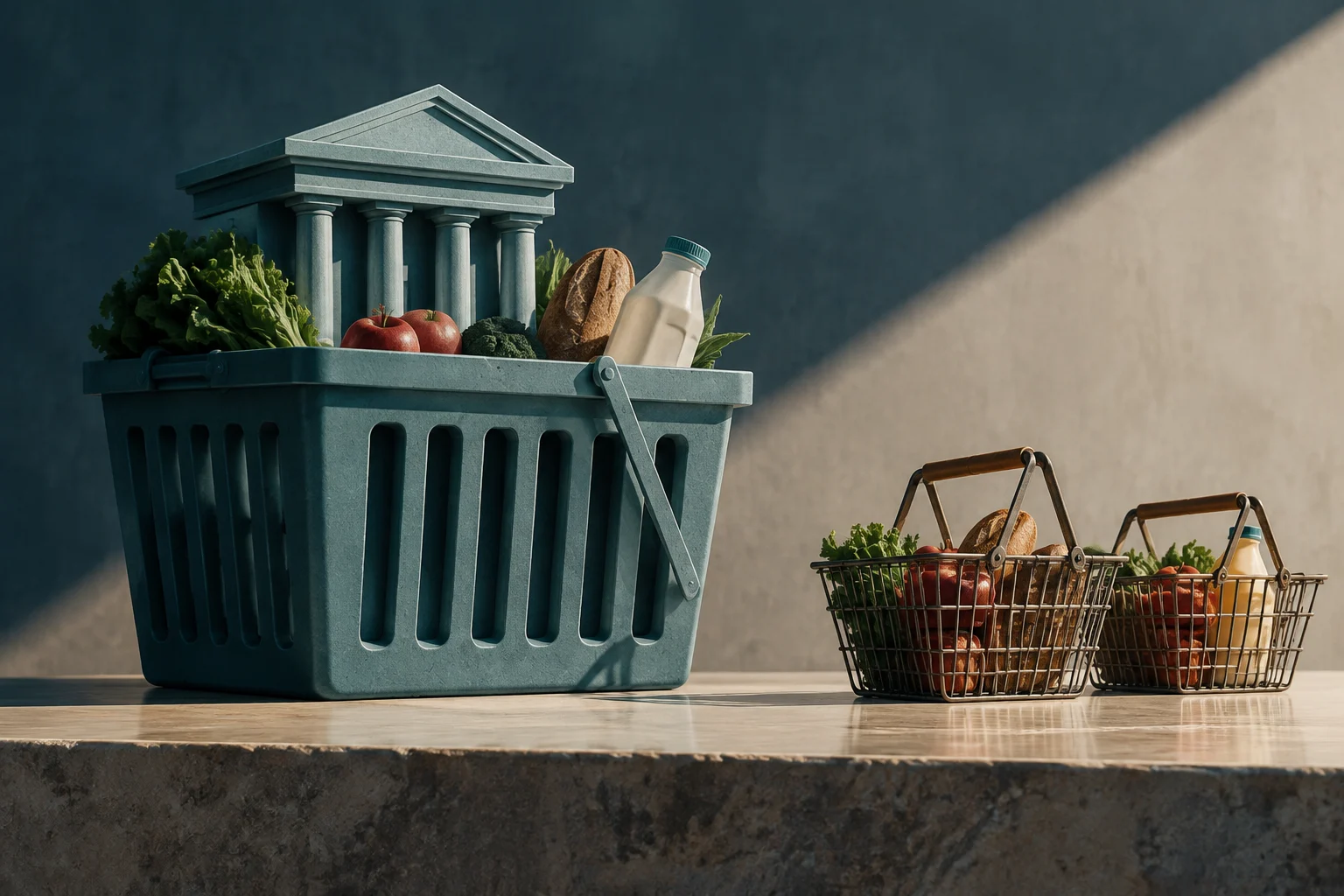
Debate over food prices in Australia has given rise to a large-scale proposal: create Fair Go Grocers, a publicly owned supermarket chain that would compete with Coles and Woolworths. The plan, drawn up by the Green Institute, involves acquiring 200 stores from those chains and building another 424, as well as expanding distribution infrastructure. Its estimated cost is A$25.1 billion over five years.
The initiative stems from a concentrated market. Coles and Woolworths account for around two-thirds of national supermarket sales, according to the data cited in coverage. The Green Institute argues that a new chain, designed to operate without distributing profits to shareholders, could increase competition and make essential goods more affordable. But the proposal has faced objections from both independent retailers and competition analysts.
What the plan includes and what savings it promises
Fair Go Grocers would combine the purchase of existing stores with new openings: the plan calls for 624 supermarkets in total and 13 distribution centres, including three to be acquired and ten to be newly built. The institute aims for the chain to reach approximately 20% of the market and, once established, cover its costs with its revenue.
The Green Institute also says that essential goods could be sold for up to 30% less than at Coles and Woolworths and that regular grocery spending could be reduced by 22%. Its estimates include savings of about A$60 per week for a family of four. These are projections by the plan’s proponents, not observed results: they depend on the chain being able to operate at the planned scale and sustain lower prices.
The initiative is neither an approved policy nor an operating network. Its financing, rollout and ability to compete remain open questions. The A$25.1 billion estimate covers the initial five-year period; analyst Allan Fels notes that the outlay could be added to public debt and would have to be recouped over time.
Independent retailers fear new competitive pressure
Martin Stirling, chief executive of Master Grocers Australia, questions whether the government should enter food retailing. He considers it unnecessary to spend A$25 billion on another chain and argues that the government should make it easier for independent operators such as IGA, FoodWorks, SPAR and Friendly Grocer to expand.
Stirling also warns that a state-backed chain could add pressure to businesses already competing with the major supermarkets. The concern points to a central tension in the design: an initiative intended to increase competition with Coles and Woolworths could also compete for customers and scale with independent stores, including those serving regional and rural communities.
Viability does not depend on price alone
Fels, a former head of the Australian Competition and Consumer Commission, acknowledges that the market has competition problems and that suppliers and farmers report an imbalance in bargaining power. However, he argues that this concentration alone does not prove that the government should become a supermarket owner.
In his view, a public chain would have to compete not only on prices, but also on quality, range, convenience and reliability. Coles and Woolworths have purchasing and distribution networks developed over decades; replicating them on a national scale would be a considerable challenge. Fels also warns that lower prices could reflect financing, premises or losses covered with public resources, meaning that part of the cost would fall indirectly on taxpayers.
The analyst sees a possible, more limited justification for intervention in remote communities with little commercial provision, although he considers that freight subsidies or support for existing local stores could be more flexible alternatives. He also suggests other ways to strengthen competition, such as improving access to retail locations, increasing price transparency and preventing mergers that would further reduce competition.
For now, Fair Go Grocers puts a public policy dilemma at the centre of the debate: whether the government should compete directly in food retailing or focus on changing the conditions so that more operators can do so. The savings and self-sufficiency figures are part of the proposal; its actual cost, its effects on independent retailers and its ability to sustain a national network have yet to be demonstrated.